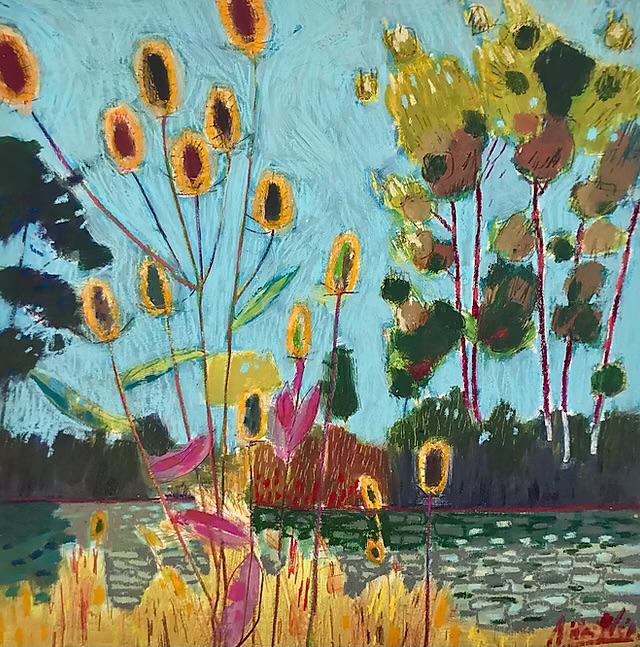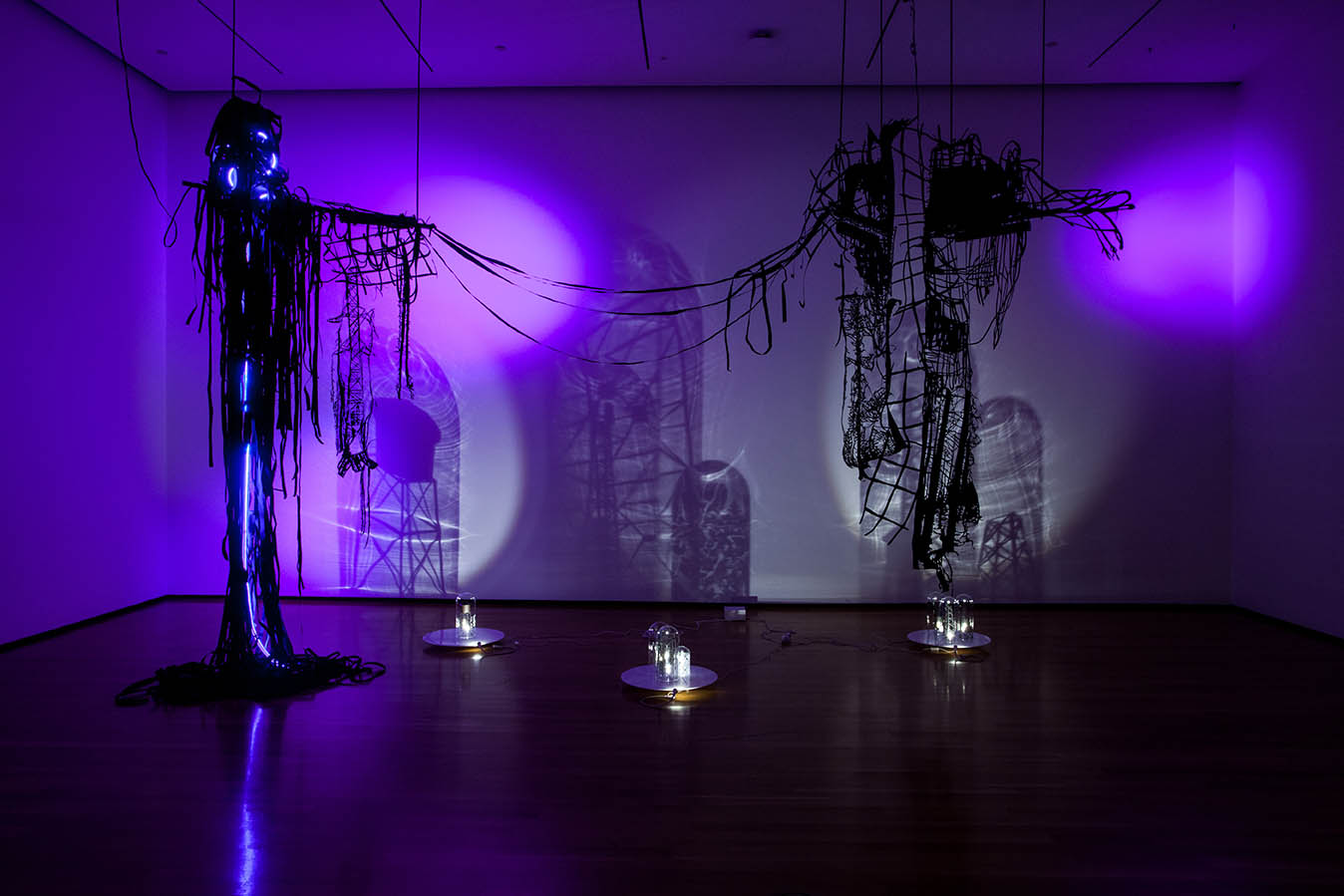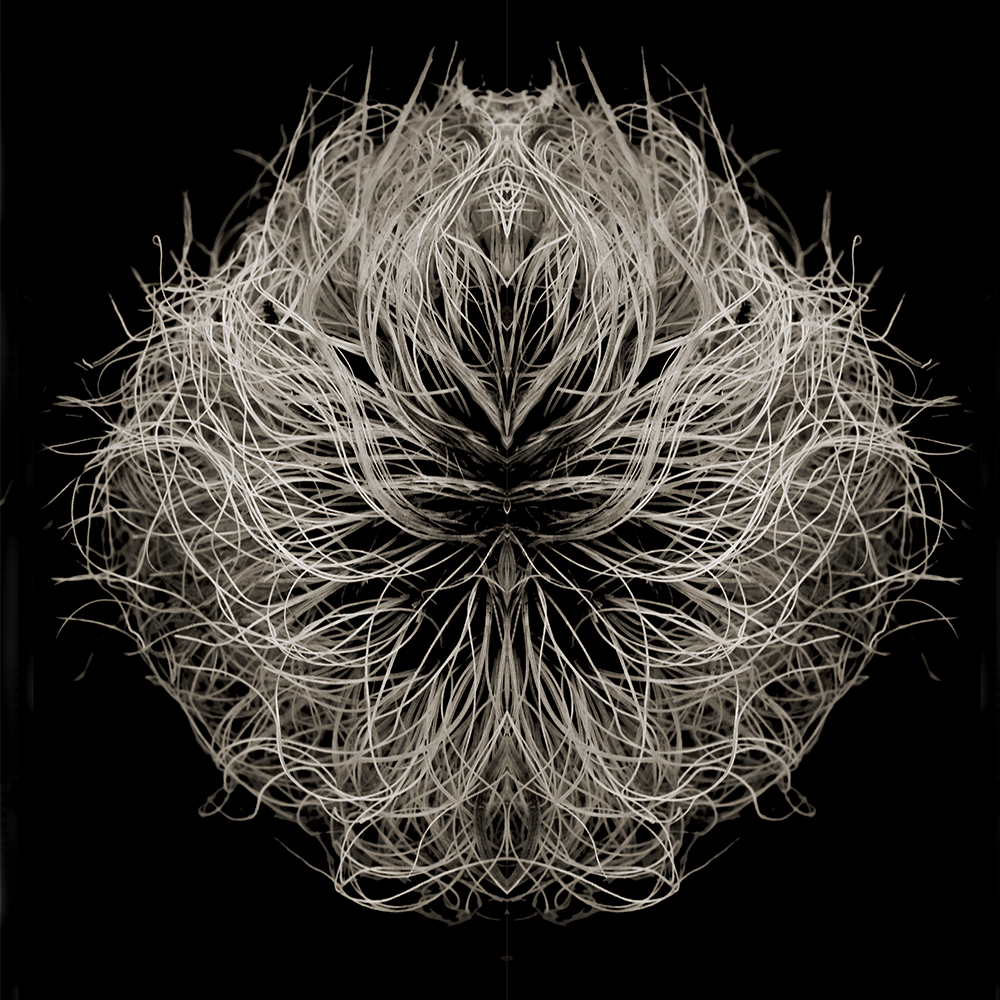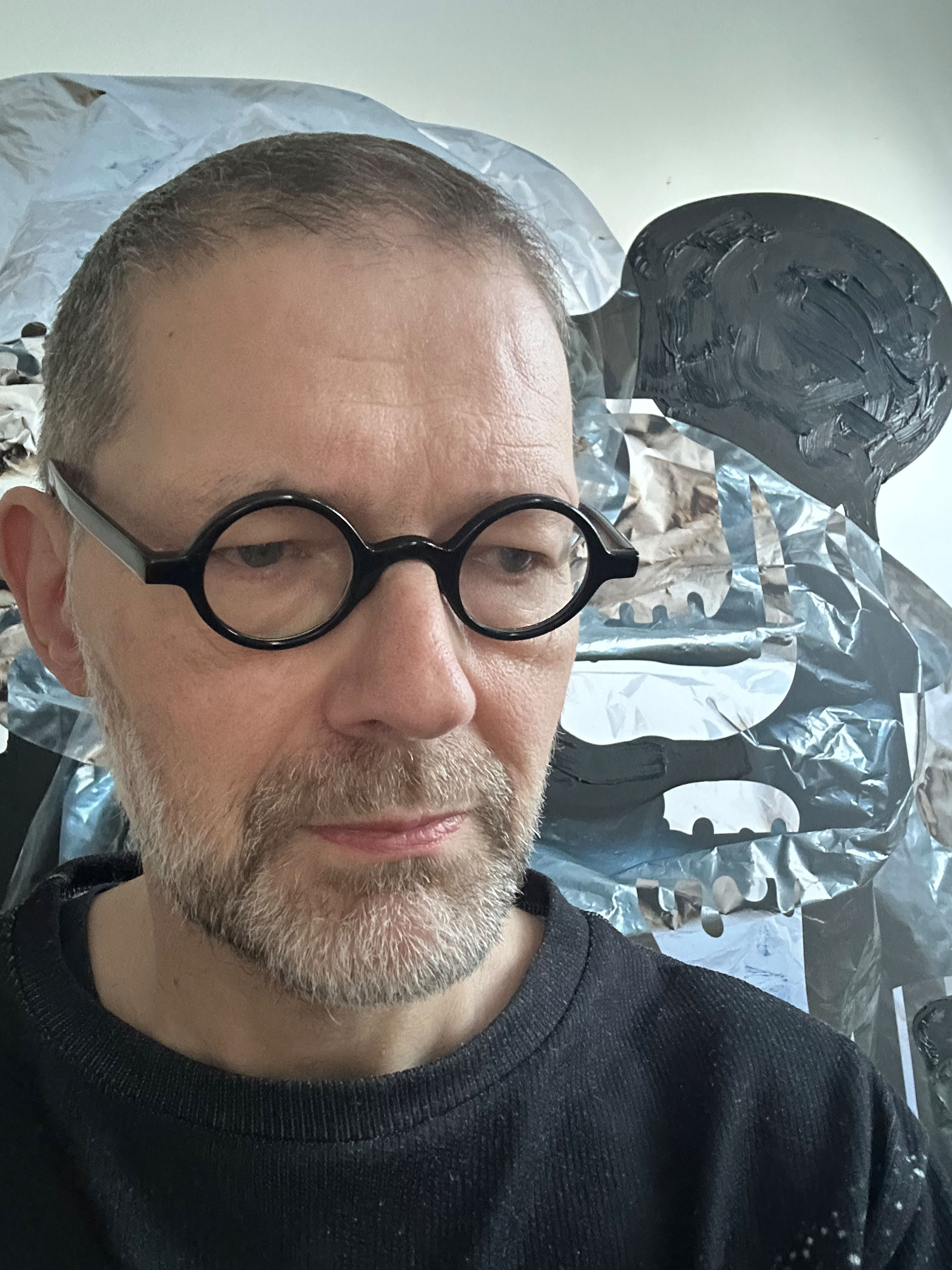
Henrik Langsdorf, submitted artwork
Henrik Langsdorf
Painting, Video
Brooklyn
Henrik Langsdorf is a multidisciplinary artist working across abstraction, collage, video, and public space. His work probes his home country Germany’s colonial history while exploring the unintended consequences of urban planning and human impact on the environment, imagining moments when improvisation and uncontrolled growth take over. His video installation "Ville Fantôme / Kinshasa La Belle", which explores forms of ingenuity within urban deterioration, has been presented at the Congo Biennale and PS122 Gallery, New York. In 2021, he founded "Blind Spots in the Sun", a Kassel-based initiative addressing colonial history and racism in Germany through exhibitions and public programs. His video work "Rudolf Duala Manga Bell — A German Story", about Germany’s colonial presence in Cameroon, has been shown at ruruhaus (a documenta fifteen venue), MARKK Museum, Hamburg, and Doual’Art, Douala, and recognized in experimental film contexts. In 2022, he presented two video installations in partnership with documenta fifteen, examining racist violence and the role of social media in its spread. Forthcoming are a residency at Yaddo and a live performance of "Rudolf Duala Manga Bell" developed with vocalists from the Metropolitan Opera.
Works
Henrik Langsdorf, submitted artwork
I work in video, collage, painting, mixed media, and public art. In recent years several currents have emerged. One body of work engages the colonial history of my native Germany and its reverberations in the African diaspora, approached through video installation that focuses on overlooked stories of resistance and how Germany’s self-image as a “civilized” society obscures both historic discourse and post-colonial reckoning. I also work on utopian ideals in architecture and the bleak realities left in their wake, as well as the impact of non-degrading materials in a historic context. Drawing on sources from the places I’ve lived — architectural fragments from Kinshasa, fungi gathered near my parents’ home in Germany, and plastic waste found in New York — I create collages where structures decay, merge, and regrow. The “Deep Space” series extends this inquiry into an imagined future where architecture, plastic debris and organic forms merge in a post-human world, while the “Plasticenic” series considers how synthetic matter embeds itself into historiography. Across these bodies of work, I am interested in both the destructive force of human ambition and the resilience that emerges after devastation.